
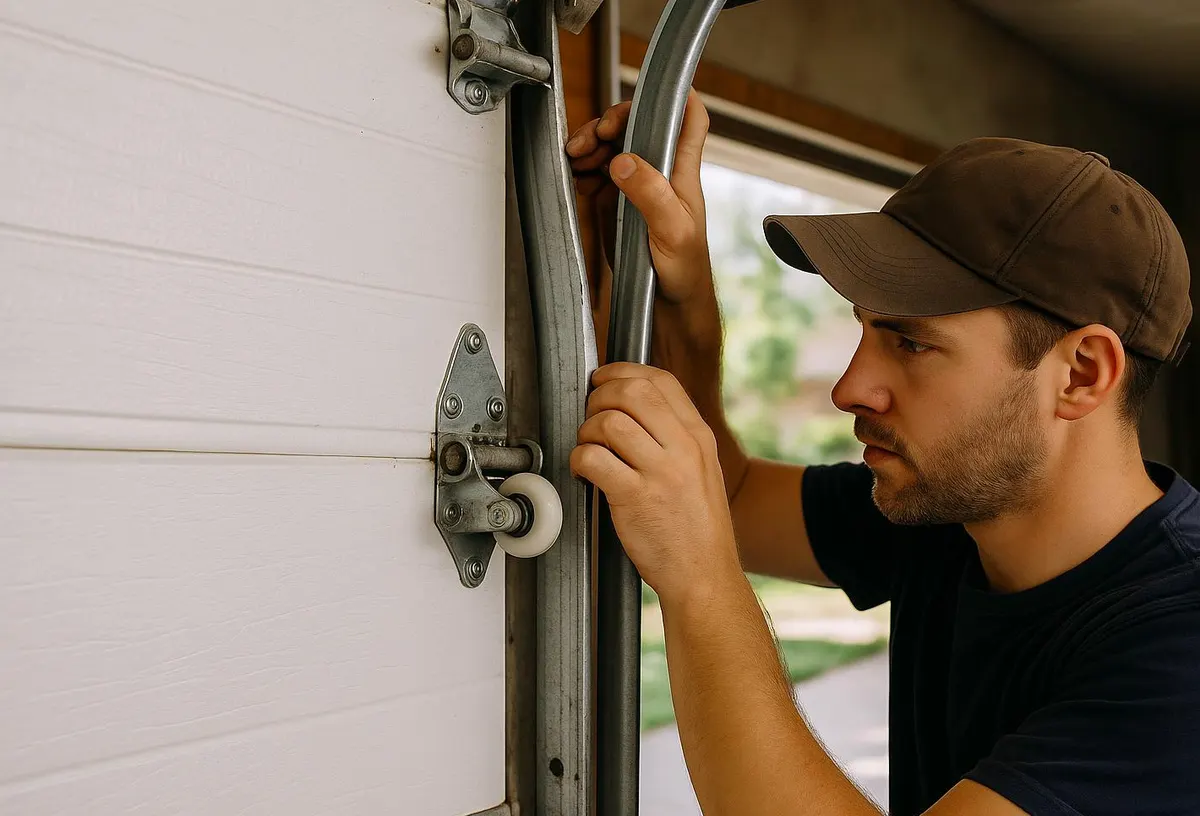
What a Technician Sees This Time of Year
A typical call in late fall looks like this: the homeowner says the garage door has started dragging, sticking at the bottom, or grinding softly when it closes. Nine times out of ten, the cause traces back to months of South Florida humidity and afternoon downpours. Wood panels have swollen slightly. Steel tracks and spring coils have a thin film of surface rust. Weatherstripping has gone soft and sticky instead of firm and flexible. None of it happened overnight — it built up over a long, wet hurricane season, and now that the air is finally drying out, it's the right time to catch it before it turns into a real repair.
Check What the Humidity Left Behind
Months of high humidity, salt-laden air, and sudden storms are hard on garage door hardware. Look for:
- Rust spots on the torsion spring, hinges, rollers, and track bolts — especially if the home is closer to the coast, where salt air speeds up corrosion.
- Swollen or warped wood panels that no longer sit flush, causing the door to bind in the track.
- Soft, cracked, or peeling weatherstripping along the bottom seal and side jambs — a common entry point for water and pests during heavy rain.
- Stiff or noisy rollers from grit and moisture working into the bearings.
Catching these now, while the weather is milder, is easier than dealing with a seized spring or a door that won't seal once temperatures drop further.
Lubricate and Tighten Before the Dry Months
As humidity drops heading into winter, wood trim and rubber seals can go from swollen to brittle fairly quickly. It's worth doing a full once-over:
- Wipe down tracks and apply a silicone-based lubricant to rollers, hinges, and the torsion spring. Avoid heavy grease, which attracts dust and grit.
- Check all mounting bolts, including the bracket that holds the spring system and the hinges connecting panels — vibration from months of wind and storms can work hardware loose.
- Inspect the bottom seal for cracks or gaps. A damaged seal lets in cooler night air, moisture, and the occasional curious lizard or palmetto bug.
- Test the auto-reverse safety feature by placing a block of wood in the door's path and closing it. It should reverse immediately on contact.
If the door has felt heavier than usual to lift manually, or the opener strains and makes a louder motor noise than before, that's often a sign the spring has lost tension — common after a long season of heat cycling and humidity swings.
Don't Skip the Opener and Sensors
Storm season brings power flickers, surges, and sometimes direct lightning strikes nearby. If the opener has been acting up — responding slowly, reversing without cause, or not responding to the remote at all — it may be worth having it tested. Battery backup units, if installed, should also be checked; batteries can degrade faster in humid, hot garages and often fail right when they're needed most during a storm-related outage.
Sensor alignment is another easy thing to overlook. Heavy rain, wind-blown debris, and even a bumped ladder during storm prep can nudge the photo-eye sensors out of alignment, causing the door to refuse to close or reverse unexpectedly.
Think About Wind-Load Hardware Too
Garage doors in this area are built or retrofitted to meet wind-load requirements, and that hardware takes a beating during an active storm season. Reinforcement struts, track brackets, and end hinges should all be checked for looseness or corrosion while the weather is calmer. It's a good time to confirm everything that was tightened or reinforced before the last storm is still holding strong, rather than finding out during the next one.
When to Call Plantation Garage Door
If the door is sticking, dragging, sagging on one side, or the spring looks visibly stretched, rusted, or gapped, it's time to call in a professional rather than keep adjusting it yourself — torsion springs are under heavy tension and not safe to handle without the right tools. Plantation Garage Door handles Spring Replacement and full Garage Door Maintenance visits that cover lubrication, hardware tightening, weatherstripping replacement, and opener testing in one trip. We also offer Emergency Garage Door Service if a door stops working altogether and you need it back in action the same day.
If your garage door has been fighting you since the last round of storms, don't wait for it to get worse. Call Plantation Garage Door today and let a local technician get it running smoothly before the season changes again.