
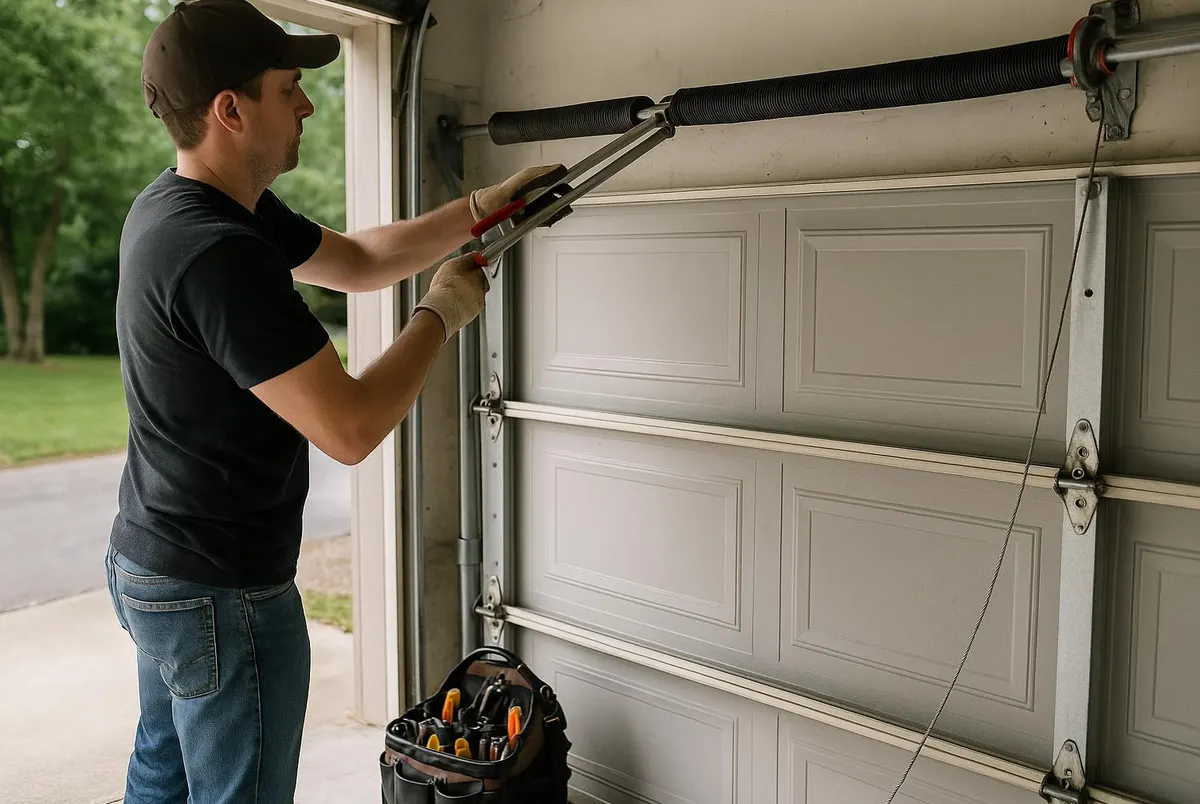
The Moment You Notice It
You're pulling into the garage after a storm rolled through, and you catch it out of the corner of your eye: the red emergency release cord is swinging a little too freely near the top of the door, or there's a thin gap at the bottom corner where the weatherstripping has pulled away from months of swelling and drying out. Maybe you just never thought about it until a neighbor mentioned a break-in two streets over, and suddenly that gap looks less like wear and tear and more like an open invitation.
Garage doors are the part of the house most people forget to think about as a security feature. They're big, mechanical, and usually operated on autopilot. That's exactly why they're one of the easier entry points for someone who knows what they're doing.
How It Actually Happens
Most garage break-ins aren't dramatic. There's no crowbar, no breaking glass, no alarm going off. The common methods are quiet and fast:
- The emergency release trick: Older doors have a visible release cord near the top. With a thin wire or a straightened coat hanger pushed through the gap between the door and the frame, someone can hook that cord from outside and pull it, disengaging the opener entirely. The door then lifts by hand in seconds.
- Fixed-code openers: Older garage door openers broadcast the same signal every time. A cheap code-grabbing device can capture that signal from the street and replay it later to open the door remotely, no fumbling required.
- Forced lift on a worn or unlocked door: If the door isn't locked and the opener isn't engaged, a determined push or two is sometimes all it takes, especially on doors with worn tracks or loose rollers that no longer hold tight in the frame.
- Small windows in the door panels: Decorative windows look nice, but on some doors they sit close enough to the release mechanism or the interior lock that a small break-in and reach-through does the job.
- The connecting door into the house: Once someone is inside the garage, the door between the garage and the living space is often the weakest door in the entire home — hollow, unlocked, or fitted with a lock that's never been tested under pressure.
None of this requires much skill. It requires an unlocked habit, a worn part, or outdated hardware, which is why the fix is usually just as simple as the problem.
Why This Matters More Here
Humidity and salt-tinged air do real damage to garage door hardware over time. Steel brackets, lock mechanisms, and spring hardware corrode faster here than in drier climates, and that corrosion weakens the exact parts meant to keep a door secured. A lock that's gritty or stiff from rust often gets left unused altogether because it's annoying to operate — which defeats the purpose entirely.
Wood and composite doors also swell during the wet months and shrink back during drier stretches, which can leave gaps at the seams that weren't there when the door was installed. Those gaps are exactly what make the coat-hanger trick possible. And after hurricane season, it's common for doors to be slightly knocked out of alignment from wind pressure or debris, even if no one noticed obvious damage. A door that's a quarter-inch off its track is a door that's easier to force.
Habits and Hardware That Actually Stop It
Lock Down the Emergency Release
This is the single most overlooked fix. A simple zip tie threaded through the release mechanism (positioned so it can still be pulled hard in a real emergency, like a power outage) blocks the coat-hanger method completely. Purpose-built emergency release shields are inexpensive and do the same job more cleanly.
Upgrade From a Fixed-Code Opener
If your opener is more than 10–15 years old, it may still be broadcasting a fixed code. Rolling-code technology, standard on current openers, changes the signal every time you use it, which makes code-grabbing devices useless.
Treat the Interior Door Like a Front Door
The door connecting your garage to your house should have a solid core, a real deadbolt, and a habit of actually being locked. This single change removes the payoff for anyone who manages to get into the garage itself.
Keep the Remote Out of the Car
A remote clipped to a visor is an invitation if the car itself is ever broken into or borrowed. Clip-on remotes that come inside with you, or a smartphone-based opener, remove that risk entirely.
Address Gaps and Misalignment Early
If you can see daylight at the corners or the door doesn't sit flush when closed, don't wait for it to get worse. A door that seals tightly isn't just more weather-resistant — it's harder to manipulate from outside.
Add Motion Lighting at the Approach
Most of this activity happens in the dark and relies on not being seen. A motion-triggered light at the driveway or garage approach removes that advantage with almost no effort.
When to Call Plantation Garage Door
If your emergency release is exposed, your opener predates rolling codes, or your door doesn't close flush anymore, it's worth having it looked at before it becomes a bigger problem. Our Garage Door Opener Repair & Installation service covers upgrading older fixed-code systems to current rolling-code units, and our Garage Door Maintenance visits catch the alignment, seal, and hardware issues that quietly turn a secure door into an easy target — especially after a season of heat, humidity, and storms.
If something about your garage door has been bothering you, don't wait for it to become a break-in story. Call Plantation Garage Door and we'll come take a real look, no guesswork, serving homes throughout Plantation, FL and the surrounding area.